Hazard perception
Recognise a dangerous situation early, judge how much time and space you have and choose a safe reaction.
Read and practise chapter 1 in the appWhat you will learn in this chapter
You do not recognise danger only when it is already there. In this chapter you learn to read the road ahead: what you see, what you cannot see and what can happen. Then you choose a reaction that fits the situation. The law gives the basic rules; it is up to you to apply them properly in every situation.
- the three steps of observing, assessing and acting;
- the basic rule: being able to stop within the distance you can see and that is clear;
- children, cyclists and pedestrians you meet unexpectedly;
- danger behind parked cars, in bends, with oncoming traffic, around buses and trams, at roadworks, at level crossings and in bad weather.
Observe, assess, act
A good driver works in three steps, often without noticing it. First you observe: what do you see on the road, at the side and in the distance? Then you assess what can happen: who could step onto the road, what could come out of a side road, what is the car in front of you doing? Only then do you choose an action: take your foot off the accelerator, slow down, adjust your position or simply carry on driving.
The order matters. Anyone who reacts before they have observed reacts to the wrong thing. Anyone who sees but does not assess does not know which reaction is needed. And keep observing after you have reacted: the situation keeps changing.
Read the situation
Do not look only at what is straight ahead of you. Read the whole situation: your speed, visibility, the course of the road, the space you have, the other road users, the parked vehicles and the clues that point to traffic you cannot see yet.
- Visibility: where does your view end, and what could be behind a bend, a hedge or a parked car?
- Space: how much room do you have at the side, in front of you and behind you?
- Traffic: who is on the road, at the edge, or about to come that way?
- Weather and road surface: does the weather limit your visibility, and is the road surface wet or slippery?
- Signs and markings: do they warn of something you cannot see yet?
The basic rule: stopping within what you can see
The law puts it this way: a driver must be able to bring their vehicle to a halt within the distance they can see and over which the road is clear (Traffic Rules and Signs Regulations (RVV) 1990, article 19). This is the yardstick for your speed. The speed limit is an upper limit; this rule determines what you can safely drive.
Seeing ahead means: how far can you see the road without having to move? Clear means that within that stretch there is nothing standing or walking that obstructs you. A bend, a hedge or a parked car reduces your view. Then you also have to drive more slowly, so that you can stop within the stretch you can see.
The law also has a broad rule: nobody may behave in such a way that danger arises or may arise on the road, or that traffic is or may be obstructed (Road Traffic Act 1994 (Wegenverkeerswet), article 5). So what matters is what your behaviour can cause, not only what has already happened.
Following distance and space ahead
The law does not specify a fixed distance to the car in front of you. The yardstick here is again article 19: if the car in front suddenly brakes, you must be able to stop within the space there is. The more space you keep, the more time you have to react.
Driving very close behind another vehicle is listed in the law as one of the behaviours that can count as a serious traffic offence, when it is done deliberately and danger to another person's life is to be feared (Road Traffic Act 1994 (Wegenverkeerswet), article 5a). So it is not only unsafe; in the right circumstances it can also be punishable.
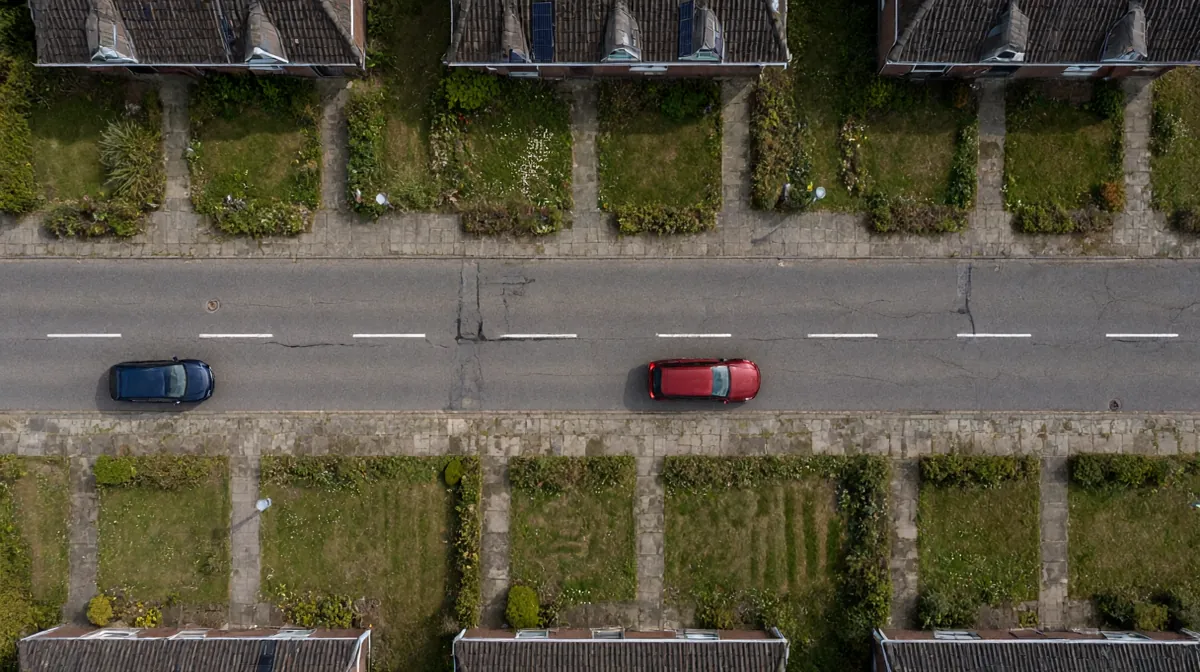
Children on or beside the road
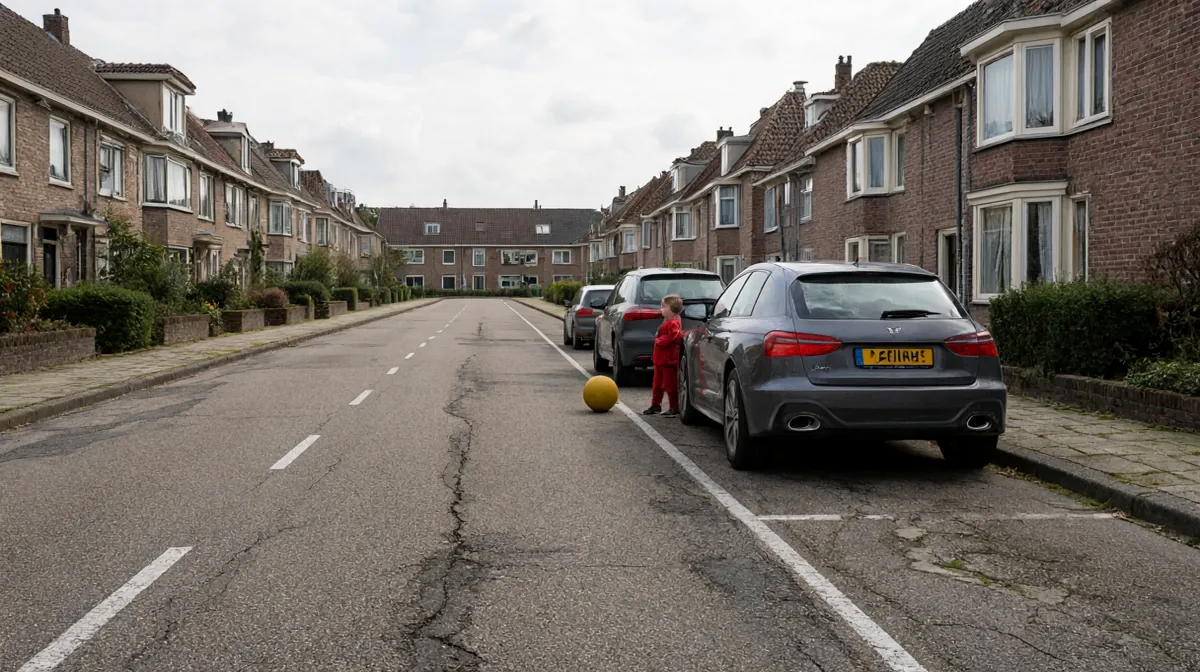
Children are unpredictable. They do not always pay attention to traffic, they can run out from behind a car and they do not always react as you expect. The law does not mention children separately in the rules of conduct. The general rules therefore apply in full: you must stop within what you can see (article 19) and you must not cause danger (Road Traffic Act 1994 (Wegenverkeerswet), article 5).
Do you see a child by the road, a ball lying on or beside the carriageway, or a group of children playing? Then you reduce your speed before you get there, not only when someone steps onto the road. A ball by the road is a warning that someone may be coming after it.
Cyclists
Cyclists use the compulsory cycle path. If there is none, they ride on the carriageway (RVV 1990, article 5). So you must take that into account, even if you do not directly expect cyclists on the carriageway. A cyclist can change direction quickly or swerve unexpectedly.
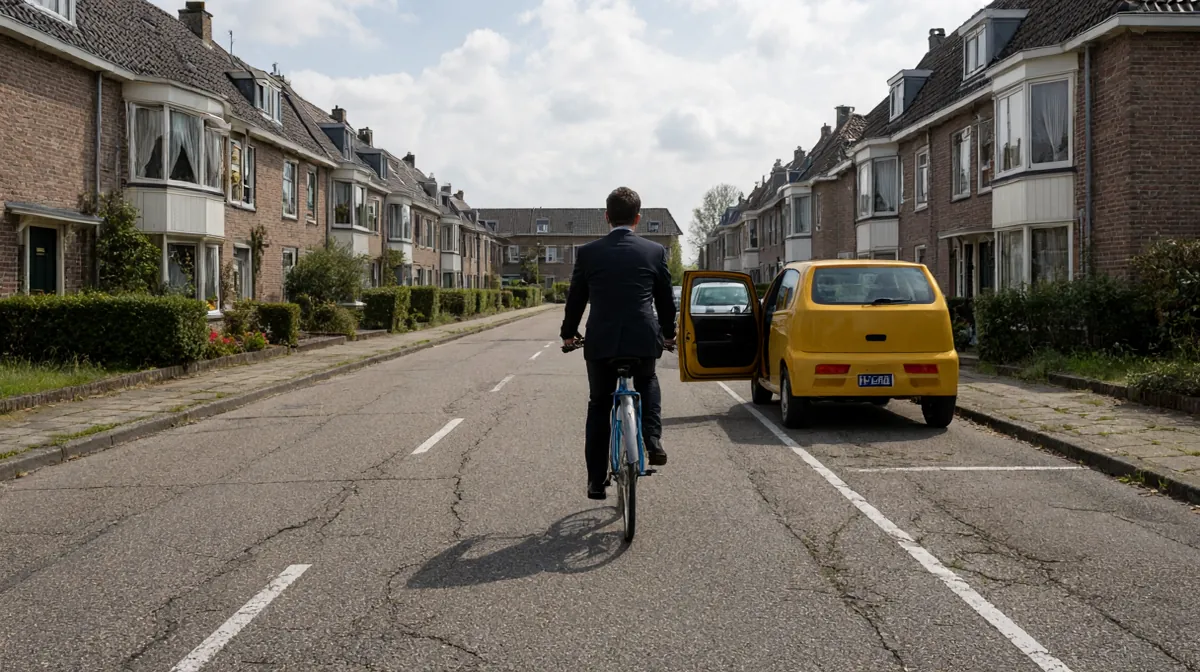
Pay particular attention to the cyclist riding between the carriageway and parked cars. There is little space there and you see them only late, and doors or pedestrians can also suddenly appear there.
Pedestrians
Pedestrians belong on the pavement or footpath. If there are none, they walk on the cycle path, on the verge or at the very edge of the carriageway (RVV 1990, article 4). So do not expect pedestrians only on the carriageway: a pedestrian may also be standing at the edge of the road and step onto it at the last moment.
At a pedestrian crossing you let pedestrians go first who are crossing or who are evidently about to do so (RVV 1990, article 49, paragraph 2). Blind people with a white stick with one or more red rings and other people who have difficulty moving around you let go first anywhere, even where there is no crossing (article 49, paragraph 1). So watch not only for who is already crossing, but also for who is waiting on the pavement.
Parked cars and car doors
Parked cars block your view. Behind every car there may be someone: a child, a pedestrian who wants to cross or someone who has just got out. A car door that opens, or a person who walks onto the carriageway between two cars, is often visible only late.
The law has no separate article on car doors. The general rules apply here too: stopping within what you can see (article 19) and not causing danger (Road Traffic Act 1994 (Wegenverkeerswet), article 5). So keep extra distance from parked cars, especially if a cyclist is riding alongside the cars.
Bends and places with poor visibility
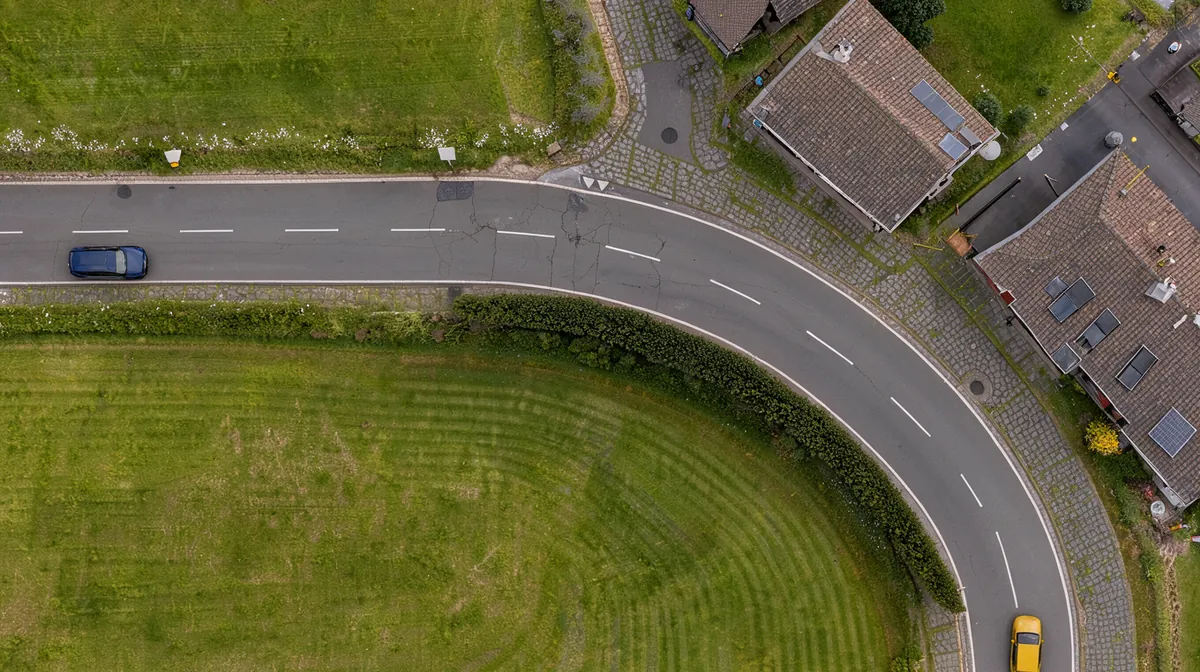
In a bend you see less far than on a straight road. A hedge, a row of trees or a building on the inside of the bend takes away your view. You see what is happening beyond the bend only when you are almost there.
Keep to the right and adjust your speed so that you can stop within the stretch you can see (article 19). Drivers must keep to the right as far as possible (RVV 1990, article 3). Not keeping sufficiently to the right at a place with poor visibility is, in the law, a behaviour that can count as a serious offence, if danger to another person's life is to be feared (Road Traffic Act 1994 (Wegenverkeerswet), article 5a).
Oncoming traffic and overtaking
Overtaking is done on the left (RVV 1990, article 11). A driver who overtakes must do so safely. But if an oncoming vehicle overtakes another vehicle, it may end up on your half of the road. The best way to avoid a collision is to stay as far to the right as possible and, if necessary, to slow down.
Dangerous overtaking is listed in the law as one of the behaviours that can be a serious traffic offence, when it is done deliberately and puts another person's life in danger (Road Traffic Act 1994 (Wegenverkeerswet), article 5a). For you it means: keep to the right and watch what is happening on the opposite half of the road.
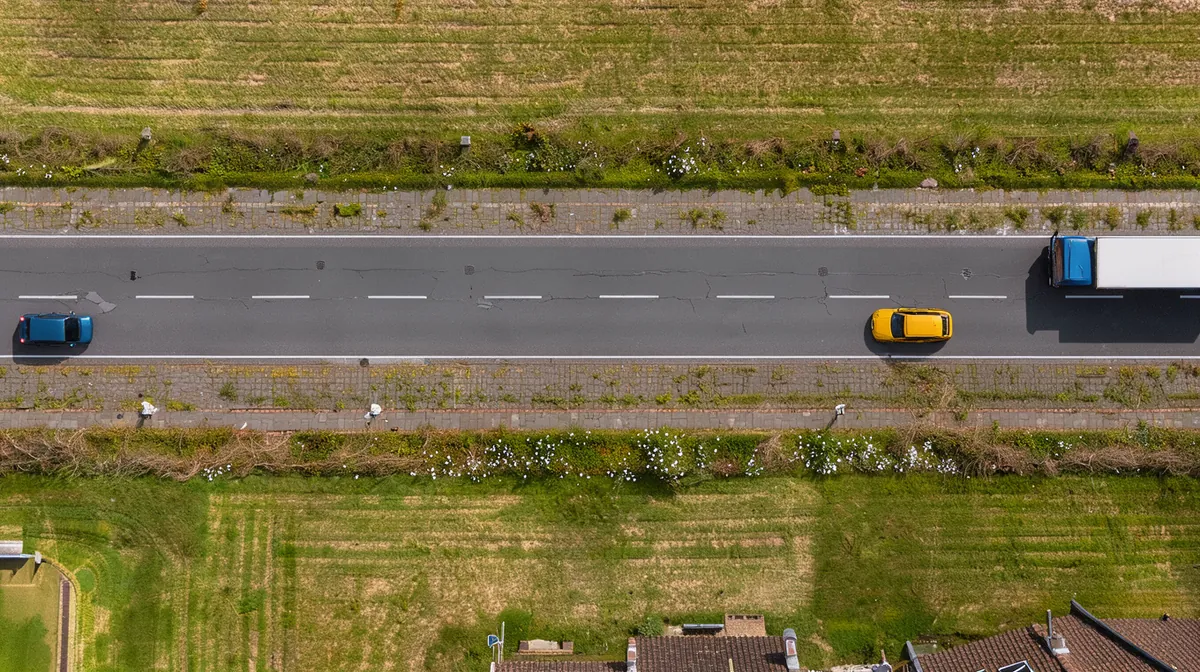
Sounding the horn or flashing your headlights (light signal) is done only to avert imminent danger (RVV 1990, article 28). Your indicator does not come under this: you simply use it when turning and for other manoeuvres. So it is not a way to urge someone on or to show your impatience.
Bus or tram at a stop
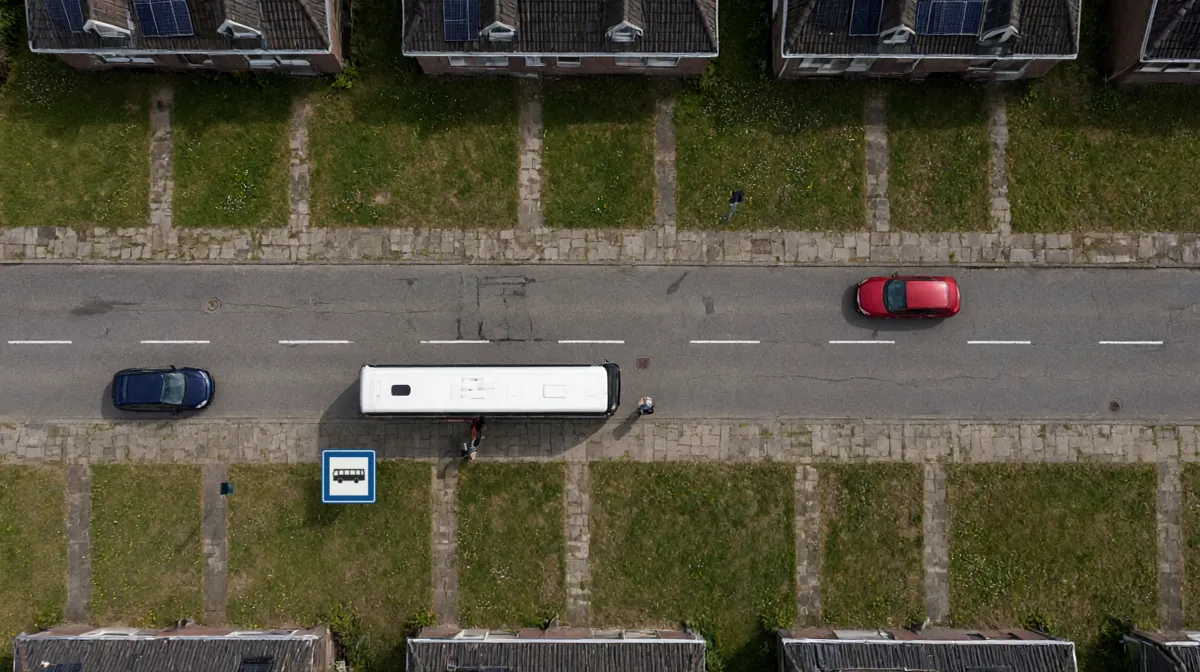
A bus or tram that is stationary so that passengers can get on and off is a source of danger. Passengers sometimes step straight onto the road. A bus also blocks the view of what is happening in front of it and beside it. Anyone passing the bus on the side where passengers get on or off must give them the opportunity to do so (RVV 1990, article 52). That means: slow down and wait until the passengers are safe.
At a bus stop you may not stop level with the chequered marking or, if there is none, within twelve metres of the bus stop sign. This does not apply to briefly letting passengers get on and off (RVV 1990, article 23). In a built-up area you give a bus that uses its indicator to show that it wants to pull away from the stop the opportunity to do so (RVV 1990, article 56). Outside built-up areas that rule does not apply: there, pulling away is an ordinary special manoeuvre for the bus, and it lets the other traffic go first (article 54).
Roadworks
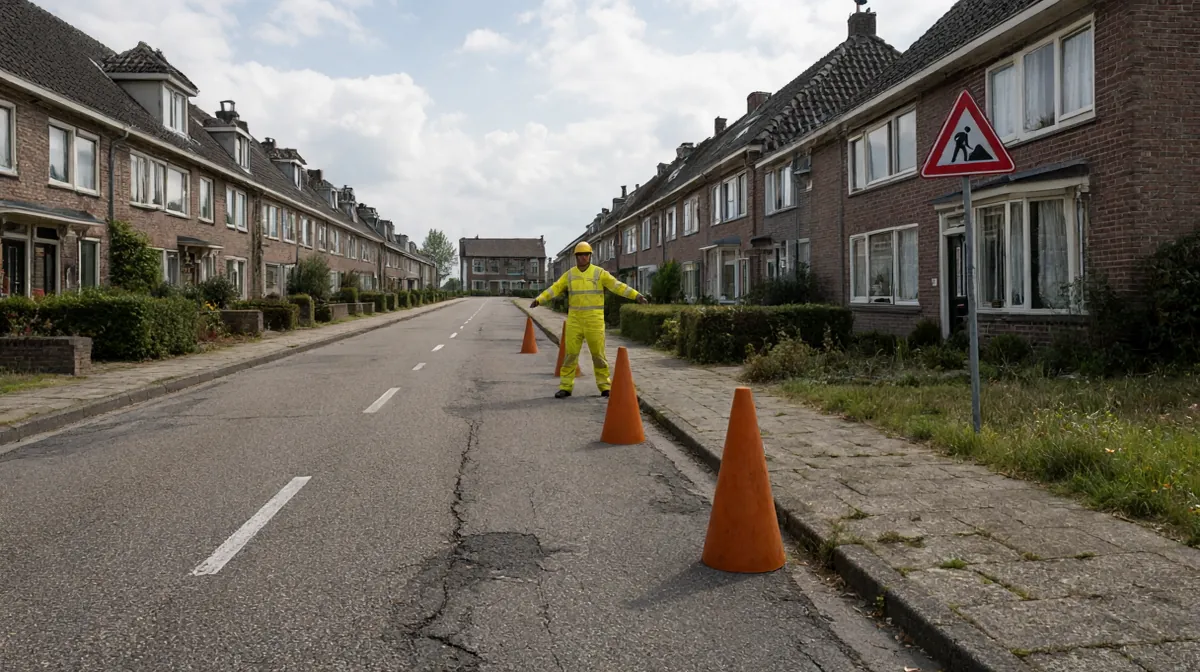
At roadworks the road changes quickly. A lane becomes narrower, there are cones and there are people working on or right beside the road. The ‘roadworks’ warning sign (J16) announces this. If you see the cones only late, your speed was possibly too high for what you can see.
Work vehicles carry, in certain circumstances, a yellow or green rotating, strobe or flashing light (RVV 1990, article 30). That light warns of work, but it changes nothing about the general rules: stopping within what you can see (article 19) and not causing danger (Road Traffic Act 1994 (Wegenverkeerswet), article 5).
Level crossings
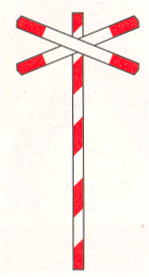
At a level crossing, where the road crosses a railway, you always let a rail vehicle go first. You may only drive onto a level crossing if you can drive straight through and clear the crossing completely (RVV 1990, article 15a). You may not stop on a level crossing (article 23).
At level crossings with lights, the following applies: a white flashing light means no train is approaching, a red flashing light means stop (RVV 1990, article 71). A sign that announces a level crossing, such as J12, gives a warning in advance so that you can slow down in time.
Weather and poor visibility
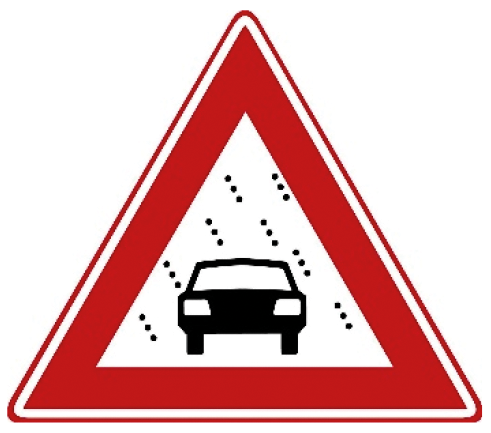
Rain, fog, snow and freezing rain shorten your view and make the road surface slippery. What you can see ahead becomes smaller, and the rule of article 19 thereby becomes stricter: you must be able to stop within a smaller stretch.
In fog, snowfall or rain that seriously limits visibility, you may use fog lights (RVV 1990, article 34). In fog or snowfall that limits visibility to less than 50 metres, you may use the rear fog light. When visibility is seriously restricted during the day you use dipped headlights (article 32). A speed limit on the sign is an upper limit: in bad weather, stopping within what you can see remains the yardstick.
Which reaction fits
When you see danger, you first determine how great it is and how much time and space you have. Then choose the reaction that fits best:
- Easing off the accelerator: danger may arise. You reduce your speed and get ready to react further.
- Slowing down: the danger is there now, or may arise at any moment. You brake in good time and in a controlled way.
- Carrying on: there is no imminent danger, you have a clear view and your speed is suitable. You do keep looking.
Slowing down is not always the only answer. Sometimes a small reduction in speed is enough, or you keep further to the right or choose a different position in the lane. What fits depends on visibility, traffic and space. Look around again straight after your reaction: a situation that first seemed safe can be different within a short time.
Pitfalls
- You look only at what is straight ahead and do not see the pedestrian or cyclist at the side.
- You think there is no danger because you see nothing. Something can still be behind a bend, a hedge or a parked car.
- You trust that others see you and give you right of way.
- You think the speed limit determines how fast you may drive. The basic rule is that you can stop within what you can see and what is clear.
- You sound your horn or flash your lights to warn or urge someone else, whereas that is only allowed in the case of imminent danger.
Terms
- Driver: every road user except the pedestrian. A cyclist is therefore also a driver.
- Seeing ahead: the stretch of road you can see without moving.
- Clear: on the stretch you can see, nothing is standing or walking that obstructs you.
- Immediate danger: a situation in which you already have to intervene now, for example by braking.
- Possible danger: a situation in which danger may arise. You then reduce your speed in advance and keep space, so that you can act quickly.
What applies now
CBR · checked 2026-07-15
The current exam has 50 questions that count plus 2 test questions that do not count. At least 44 of the 50 must be correct. The regular exam lasts 30 minutes. Open official source
RVV 1990, article 19 · checked 2026-10-08
Article 19 requires that you can stop within the distance you can see and over which the road is clear. The law does not specify a fixed following distance; that yardstick follows from this article. Open official source
RVV 1990, article 21 · checked 2026-10-08
On a motorway outside built-up areas the maximum speed for motor vehicles is 130 km/h (article 21, point a). Older practice images sometimes mention 120 km/h; the legal limit is in article 21. Open official source